Welcome

As is the gardener, such is the garden!!
The trouble with gardening is that it does not remain an avocation, it becomes an obsession. - Phyllis McGinley

Showing posts with label History. Show all posts

Sunday, September 04, 2011

Eucalyptus Globulus


Eucalyptus, blue gum, fever tree

Family: Myrtaceae (Zone 9)

The Australian eucalyptus is cultivated all over the world. Leaves from young trees are rounded and blue-green with a silvery bloom, those from mature trees are longer, pointed, tough and glossy green.
The first leaves are broad, without stalks, of a shining whitish-green and are opposite and horizontal, but after four or five years these are succeeded by others of a more ensiform or sword-shaped form, 6 to 12 inches long, bluish-green in hue, which are alternate and vertical, i.e. with the edges turned towards the sky and earth, an arrangement more suited to the climate and productive of peculiar effects of light and shade. The flowers are single or in clusters, almost stalkless.

It was Baron Ferdinand von Müller, the German botanist and explorer (from 1857 to 1873 Director of the Botanical Gardens in Melbourne), who made the qualities of this Eucalyptus known all over the world, and so led to its introduction into Europe, North and South Africa, California and the non-tropical districts of South America. He was the first to suggest that the perfume of the leaves resembling that of Cajaput oil, might be of use as a disinfectant in fever districts, a suggestion which has been justified by the results of the careful examination to which the Eucalyptus has been subjected since its employment in medicine. Some seeds, having been sent to France in 1857, were planted in Algiers and thrived exceedingly well. Trottoir, the botanical superintendent, found that the value of the fragrant antiseptic exhalations of the leaves in fever or marshy districts was far exceeded by the amazingly powerful drying action of the roots on the soil. Five years after planting the Eucalyptus, one of the most marshy and unhealthy districts of Algiers was converted into one of the healthiest and driest. As a result, the rapidly growing Eucalyptus trees are now largely cultivated in many temperate regions with the view of preventing malarial fevers. A noteworthy instance of this is the monastery of St. Paolo à la tre Fontana, situated in one of the most fever-stricken districts of the Roman Campagna. Since about 1870, when the tree was planted in its cloisters, it has become habitable throughout the year. To the remarkable drainage afforded by its roots is also ascribed the gradual disappearance of mosquitoes in the neighbourhood of plantations of this tree, as at Lake Fezara in Algeria.

In Sicily it is being extensively planted to combat malaria, on account of its property of absorbing large quantities of water from the soil. Recent investigations have shown that Sicilian Eucalyptus oil obtained from leaves during the flowering period can compete favourably with the Australian oil in regard to its industrial and therapeutic applications. Oil has also been distilled in Spain from the leaves of E. globulus, grown there.
In India, considerable plantations of E. globulus were made in 1863 in the Nilgiris at Ootacamund, but though a certain amount of oil is distilled there locally, under simple conditions, little attempt has hitherto been made to develop the industry on a commercial scale, Australia remaining the source of supply.
A great increase in Eucalyptus cultivation has recently taken place in Brazil as a result of a decree published in 1919 awarding premiums and free grants of land to planters of Eucalyptus and other trees of recognized value for essence cultivation.

There are a great number of species of Eucalyptus trees yielding essential oils, the foliage of some being more odorous than that of others, and the oils from the various species differing widely in character. It necessarily follows that the term Eucalyptus oil is meaningless from a scientific point of view unless the species from which it is derived is stated.
They contain a strongly scented oil in small translucent glands. The woody flower bud has a lid that is pushed off as the mass of stamens emerge. The bark frequently peels off in characteristic ragged strips.

It is used as a leave infusion (antiseptic, anorexigenic), essential oil (antiseptic, wound healing, expectorant).
The British Pharmacopoeia describes Eucalyptus Oil as the oil distilled from the fresh leaves of E. globulus and other species.The oils may be roughly divided into three classes of commercial importance: 
  • the medicinal oils, which contain substantial amounts of eucalyptol (also known as cineol) 
  • the industrial oils, containing terpenes, which are used for flotation purposes in mining operations 
  • the aromatic oils, such as E. citriodora, which are characterized by their aroma. 
The British Pharmacopoeia requires Eucalyptus Oil to contain not less than 55 per cent, by volume, of Eucalyptol, to have a specific gravity 0.910 to 0.930 and optical rotation -10 degrees to 10 degrees. The official method for the determination of the Eucalptol depends on the conversion of this body into a crystalline phosphate, but numerous other methods have been suggested 
The medicinal Eucalyptus Oil is probably the most powerful antiseptic of its class, especially when it is old, as ozone is formed in it on exposure to the air. It has decided disinfectant action, destroying the lower forms of life. Internally, it has the typical actions of a volatile oil in a marked degree.
Eucalyptus Oil is used as a stimulant and antiseptic gargle. Locally applied, it impairs sensibility. It increases cardiac action.
The oil is a powerful antiseptic and disinfectant. Rub in onto the chest for bronchitis and chest complaints, and sprinkle on the pillow to soothe coughs, colds and asthma. Several drops in warm water make a gargle for sore throats. To clear the nose and bronchial tubes, boil 25g (1 oz) fresh leaves in one liter (2 1/4 pints) water, then inhale the steam with a towel over your head.The bark produces a beige dye and when boiled for about 2 hours, the fresh leaves give a beautiful red.

When to use it? external use : antiseptic for cuts, burns, leucorrhea, respiratory infections (inhalation)
internal use : respiratory infections: sinus infection, bronchitis, common cold or flu with associated bronchitis, urinary infections

When not to use it? When you have allergy to eucalytus, possible bronchospasm with essential oil. all alkaloid are dangerous drugs.intoxication lead to hallucinations, dementia, possible death.

In veterinary practice, Eucalyptus Oil is administered to horses in influenza, to dogs in distemper, to all animals in septicaemia. It is also used for parasitic skin affections.


Saturday, August 27, 2011

The History of the Pomegranate


The many-seeded fruit of the pomegranate tree (Punica granatum), native to the Near East and tropical Africa, is one of the oldest Semitic symbols of life, fertility and abundance. The pomegranate, along with wheat and the grape, was regarded as one of the prime attributes of Ibritz, the Hittite god of agriculture. It was embroidered at the hem of Aaron's sacred robes and adorned the official vestments of the priest-kings of ancient Persia. The capitals and pillars of the Temple of Solomon were covered with carved pomegranates. Pomegranates were served at the marriage banquets of ancient Assyria and Babylonia as a symbol of love and fecundity.
When the pomegranate traveled from Asia Minor to the Far East, its symbolic meaning accompanied it. At Oriental weddings, seeds of the pomegranate were offered to the guests and when the newly-weds entered their bedchamber, pomegranates were thrown to the floor of the bursting fruits strewed their seeds all over the room, signifying that the marriage should be happy and blessed with many children. When the Moors conquered Spain about 800 A.D., they introduced the pomegranate into the Iberian peninsula and the fruit became the emblem of Granada, whose name was derived from it.

Catherine of Aragon (1485-1536), the first wife of Henry VIII, wore the Spanish emblem of the pomegranate, and the Oriental fruit became the badge of their daughter, Mary Tudor (1516-1558), Queen of England.

Presumably, the pomegranate was introduced into the new world by the early Spanish colonists and has since been commonly cultivated in gardens ranging from warmer sections of the USA to Chile. Small commercial plantings have been made in California. Though pomegranates will grow in a wide range of climates, good fruit is produced only where high temperature and dry atmosphere accompany the ripening period.
Varieties cultivated in the USA are the Wonderful, the Paper-Shell, and the Spanish Ruby.
The name of the pomegranate was derived from the Latin pomum (apple) and granatum (with seeds). When the explosive shell that strewed metal particles over a wide area was invented, the French, mindful of the seed-scattering characteristics of the pomegranate, called it granade, and the special regiments, founded in 1791, who launched these new weapons, were called granadiers.


In folk medicine, the fruit's astringent properties have been used to treat various ailments (cuts, sore throats, tapeworms, dysentery, and gum disease). Pomegranate juice is marketed in the United States as a major source of antioxidant nutrients that protect against heart disease and other ailments. Recent research has focused on its potential use as a treatment for cardiovascular disease, diabetes, and various forms of cancer.

Pomegranates are a good source of vitamin C, providing between 10-20% of the recommended daily allowance according to one source and up to 40% according to another. The potent antioxidant properties of the fruit have been attributed to its high content of soluble polyphenols. When tested in vitro on normal and colon-cancer cell lines, the juice was found to have superior antioxidant, antiproliferative, and proapoptotic effects compared with single purified active ingredients, probably the result of synergistic actions among the fruit's multiple compounds. Studies have shown that the antioxidant activity of the pomegranate flowers yielded activity two to three times the antioxidant potency of tea or red wine.

In studies of the fruit's anticancer effects, pomegranate fruit extract (PFE) has been found to be chemopreventive in mouse mammary organ culture and in human breast cancer cells in vitro. Researchers at the University of Wisconsin in Madison found that PFE significantly reduced serum prostate-specific antigen levels and inhibited proliferation of aggressive human prostate cancer cells in athymic mice. Pomegranate extracts have exerted antiproliferative, antiestrogenic, and proapoptotic actions on leukemia cells as well as breast- and prostate-cancer cells.
Its juice may be cardioprotective, reducing risk factors (such as cholesterol accumulation, foam-cell formation in macrophages, and oxidized low-density lipoprotein [LDL]) without affecting native LDL.
In a randomized, double-blinded, placebo-controlled study at the Preventive Medicine Research Institute in Sausalito, CA, pomegranate juice drinkers with coronary artery disease had a 17% improvement in blood flow compared with an 18% worsening in the control group. The study team concluded that the antioxidants in the juice may help prevent the formation of fatty deposits on artery walls. Australian researchers found that pomegranate flower extract reduced factors (hyperglycemia, hyperlipidemia, and a fatty heart) that can result in increased cardiac-impairing fibrosis in patients with type 2 diabetes. Other studies have shown the benefits of pomegranate in promoting neurologic health, maintaining joint integrity and function, exhibiting estrogenic properties, blocking herpes simplex virus replication and adsorption, enhancing immune function, treating periodontal disease, enhancing the activity of antibiotics used to treat methicillin-resistant and methicillin-sensitive Staphylococcus aureus infections, and preventing smooth muscle dysfunction and fibrosis in erectile dysfunction. In Ayurvedic medicine, the astringent properties of pomegranates are linked with bone and cartilage build-up; in the cosmetic arena, fruit-peel extract has been shown to stimulate a type of procollagen synthesis and inhibit a dermal degeneration process.The antioxidant, immune-boosting, and anticarcinogenic properties of the pomegranate, offers multiple potential medical applications.
Thanks Shari Henson for your contribution with this post.


Zen Gardens (Videos)


Tuesday, August 16, 2011

Bulbs species that grow well in the Deep South (Part 1)

It is encouraging to see that professional gardeners, people who landscape commercial buildings, have been using more agapanthus in our area.  This is called the "blue lily of the Nile", and has both white-and purple- flowered forms in addition to blue.  These are robust plants, producing flowers in summer on three-foot stems.  There are some dwarf forms available for other landscape uses or for containers.  These plants do better in partial shade than under our intense sunlight.  After about five years (in a good location) the plants will become overcrowded; divide them and share with your neighbors.  Agapanthus is a hardy plant that is seldom frozen in the Deep South.

Amaryllis ( or Hippeastrum) differs from tulips and other periodic bulbs in that it has no built-in life span, but is theoretically immortal.  These bulbs are composed of fleshy bases of large, strap-shaped leaves and a conical basal plate, sometimes with dried, but functional roots.  Left to its own devices the amaryllis is evergreen.  In the growth cycle of the bulb, there are four-leaf increments produced, with the bases of three leaves completely surrounding the basal plate and short stem.  The base of the fourth leaf in each growth unit only partially surrounds these parts.  The flower bud begins in the axil of this fourth leaf.  This develops within the bulb and emerges later in response to some unknown stimuli.  A large amaryllis (around 3 or 4 inches in diameter) may have several of these potential flowers, ready to emerge when things are right.  
Hippeastrum: The Gardener's Amaryllis (Royal Horticultural Society Plant Collector Guide) Amaryllis that you see at the garden center are usually hybrids that originated in England many years ago from several South American species, sent there by plant explorers back in the heyday of that activity.  Dutch bulb growers, having long experience with tulips, bought the hybrids from the English firms and began exporting what is called the Dutch amaryllis.  Dutch growers began large-scale production of amaryllis bulbs in South Africa.  You can find these South African bulbs for sale in the fall, ready to bloom at Christmas time in our area.  This is because they were grown in the southern hemisphere, where Christmas is in the spring.  After the first year the bulbs will reset their internal clock and begin blooming during our spring rather than in the South African Spring.  Dutch amaryllis hybrids produce massive scapes (flowering stems of bulbs), usually with four flowers.  

Until now, we have been talking about the Dutch hybrids.  The amaryllis species offers a range of flower forms, colors and sizes.  The first known amaryllis hybrid (Amaryllis x Johnsonii) used to be common in the humid South and was known as St. Joseph's lily, probably because it usually bloomed in mid-March outdoors, near St. Joseph's feast day.  Several untimely hard freezes over the past twenty years have made it a a rare plant here in the South.
Most amaryllis bulbs will survive cold snaps if they are well mulched.  In colder areas, they should be taken up in the late fall and stored cool and dry until the danger of temperatures below about 25 F is over.....(to be continued)

Saturday, July 30, 2011

The History of Herbs (Medicinal Remedies)

A Field Guide to Medicinal Plants and Herbs: Of Eastern and Central North America (Peterson Field Guide)
Since earl times plants have provided the medicinal remedies of the human race. The whole structure of modern pharmacopeia is based on man's historical knowledge of flowers, herbs, plants and trees.  Nature has provided a complete storehouse of herbal remedies to cure all ills of mankind, and today's medicines are only the chemical-pharmaceutical translations of the healing properties of herbs.  Looking back through history, we find there is not a single plant that has not been used at one time or another by men as a foodstuff, a healing, life giving medicine, or a deadly poison.  Since the dawn of civilization man has fed on berries, fruits, grasses, herbs, leaves and roots.  His selection of vegetable food in these prehistoric times was entirely by trial and error.  He continued to eat the plants that agreed with him while remaining away from those that made him ill.  After man mastered the use of fire, the roasted flesh of animals came into the foreground of the human diet and he began the domestication of animals for his daily needs.  
The shepherds of the tribal community flocks, remaining close to nature and having plenty of time during their lonely tasks, observed the behavior of various plants and the effects on their animal charges.  In this way they became the sages and medicine men of their tribes.  These herb-wise shepherds and medicine men of  prehistoric times developed into the herbalists of ancient Persia and the philosophers of antiquity.  In addition to their necessary food-plants, all the old agricultural nations cultivated herbs for their medicinal needs.  In the early days of the Christian Church, the cultivation of herbs was forbidden.  Knowledge of herbs was considered pagan because of the many mystic and magical rites connected with their use.  In the Dark Ages many of the herbal manuscripts of early days were destroyed by the martial rulers and their mercenaries who were devoid of any interest in science and culture.  The knowledge of herbs and their properties was kept alive only by the monks in the seclusion and comparative security of their monasteries.  They studied, translated and copied painstakingly by hand again and again, the few remaining herbals for posterity.  In the later Middle Ages the cultivation of herbs was again taken up by monks and nuns, who were not only healers of the soul, but also physicians and nurses to their flocks.  
Medicinal Remedies
The herb garden, called Physick Garden , became part and parcel of every cloister and monastery and, later on, of every castle, court, hospital and medical college.  Alembic laboratories, or distilling plants, the nuclei of our modern pharmaceutical industry, were set up in monasteries and hospitals to convert the herb crop into medical potions and liquors.  The rise of the chemical-pharmaceutical industry made the bulk of these herbal concoctions obsolete, but we still use many as spices and condiments for our food, in medicinal teas and infusions, and monastery herb liquors such as Benedictine, Peres Chartreuse, Trappistine and others continue to serve as stomachic tonics.  Throughout human history, flowers, plants, trees and herbs became so interwoven with man's daily life that they developed into symbols for his expressions and sentiments, passions and affections, fears and superstitions.  In ancient mythology, folklore and legend, the fertile mind assigned to plants their medicinal and nutritive properties.  The religious, legendary and symbolic meaning attached to plants has been handed down to us through the ages and today we still use many special plants in accordance with their age-old symbolism, as at Easter, Christmas, St. Patrick's and numerous other holidays and special occasions.  

Thanks Ernst Lehner.

The History of Agriculture

Untold millenia ago the cave man consumed as vegetable food the leaves, stalks, roots, fruits, nuts and seed gathered by the women and children of his tribe in the jungles and forests surrounding his habitat. He was forced to drift north and south with the seasons in pursuit of his food.  One day he discovered that the seed dropped by accident near his cave grew into new seed-producing plants.  It gave him the idea of planting seeds purposely near his dwelling place and, finally of clearing a patch of ground, preparing it by loosening the sod with a crooked stick.  (the first hoe), and seeding it.  Thus man changed from a nomadic poacher roaming for food to a settled farmer, waiting for his next harvest.  With the growth of the tribe, more and more cleared acreage became necessary to meet the rising demand for food, and more manpower was needed to prepare and till the fields.  Ultimately, man decided that the established law of the jungle, to kill all this enemies (the members of other tribes) immediately after they were taken prisoner on his hunting forays, was wasteful.  He brought them home and put them to work on his fields, the first forced-labor slaves in human history.  They call for still more intensive food production for the rising population of these settlements led to the idea of harnessing domesticated animals to the hoe.  Thus the plow became the new tool of agriculture.  
Agriculture is the scientific term for the art of cultivation the soil.
The word is derived from the Latin Ager (field) and cultura (tilling).
The practice of agriculture was the necessary antecedent to a higher form of cultural development, and wherever great states and empires were founded, cereals were grown as staple food.
A Revolution Down on the Farm: The Transformation of American Agriculture since 1929
The cultures of antiquity were all built around the agricultural centers of gran-growing peoples:  The Chinese, Indians, Koreans and Japanese in Asia; the Sumerians, Babylonians, Assyrians, Hittites, Phoenicians, Israelites and Syrians in the Near East; the Egyptians, Lydians, Nubians and Carthaginians in Africa; the Cretans, Greeks, Etruscans and Romans in Europe; the Incas, Mayas and Aztecs in South and Central America.  When we look at the farming methods and implements in the 15th, 16th and 17th centuries, we marvel at the thought that for nearly 7000 years of agricultural development the methods and tools of the toilers in the fields did not change very much.  In our century of industrialization we saw the rise of the mechanical behemoths of modern farming machinery, the reaper and the cotton gin, which not only boomed the agrarian economy of western nations but enhanced the process of industrialization and became a leading factor in the eventual establishment of the western nations as great world markets.  Newer developments in the field of chemistry led to still further uses for the products of agriculture.  Thus today we find need for plants and herbs not only as sources of food, clothing and medicine, but for such hundreds of newly developed industrial needs as tagger the imagination.  However, we have to realize that to this very day in large parts of South America, Africa and the Far East the agricultural methods and  the farming tools are still nearly the same as in Biblical times.

Thanks Johanna Lehner

Tuesday, July 05, 2011

What is a Bonsai? The History of Bonsai (Part 2)

The training of bonsai probably originated before the eleventh century in China, where they were called P'EN TSAI, the precursor of the Japanese name.  Very likely the dwarf trees were developed from small temple landscapes, like bonkei, that symbolized Horai-san, the sacred Taoist mountain of eternal youth and the bonsai were the trees that grew on the steep slopes.  Although there are other theories, thirteenth and fourteenth-century scrolls picture temples with shallow boxes in the courtyards.  Some of the boxes contain small trees; others mounds of earth that suggest mountains.
Bonsai Life Histories: The Lives of over 50 Bonsai Trees in Photos and Words
At first, grotesque, deformed trees were considered good art.  It was not until the mid 1800's that growers in Azakusa Park, a famous nursery center near Tokyo, coined the name bonsai and turned to nature for guidance in shaping their trees.  The Emperor Meiji encouraged them and by the twentieth century bonsai had become a national art of Japan.
The art came slowly to the West. The earliest bonsai to come to the west came mostly from Japan. It was in Paris at the Third Universal Exhibitions in 1878 and later exhibitions in 1889 and 1900 where bonsai were shown for the first time. One of the earliest exhibitions was held in London in 1909, and about the same time a grower from Yokohama, a Mr. Sato  brought to New York the first bonsai most Americans had ever seen.  Although Sato and the London show caused comment, neither did much to popularize bonsai.  Sato held private exhibitions and sold many of his plants to wealthy New Yorkers, but steam heat and lack of information on how to grow them soon caused their demise.  Thus the myth arose that bonsai belong to Japan and are not suited to the conditions in the
West, or to our attitudes.In these early years many westerners felt that the trees looked tortured and many openly voiced their displeasure in the way the trees were being treated by bonsai masters. It was not until 1935 that opinions changed and bonsai was finally classified as an art in the west.

With the end of World War II, bonsai started to gain in popularity in the west. It was the soldiers returning from Japan with bonsai in tow that sparked western interest in the art, even though most of the trees brought home by these soldiers died a short time after their arrival. They survived long enough to create a desire in westerners to learn more about the proper care of their bonsai. The large Japanese-American population was invaluable to Americans in this respect. Their knowledge of the art of bonsai was of great interest to many Americans learning the art.
Today, most of the bonsai in the west clearly show a strong Japanese influence. This is, of course, only natural, given the fact that in the west, this art has been introduced and taught by Japanese.
Gardeners, experienced ones at that, still say "I cant grow bonsai
. You have to think as a Japanese to do it" . But I soon discover most of them never tried.  They seem to think the techniques as both difficult and mysterious.
This is far from the truth.  If you can grow other potted plants you can learn to grow bonsai, and you don't need an Oriental turn of mind to be successful.  Bonsai offer delightful contrast to full-scale gardening, a solution to problems of space, an elegant, artistic form of expression. Culture is not complicated.  Just as confined conditions and natural elements keep some wild trees small, certain cultural techniques, purposely applied, accomplish the same thing for our plants.
Dwarfing depends upon growing in a minimal amount of soil, fast drainage, planned prunnings and sometimes wiring.  Because objectives differ from those for other container-grown plants, bonsai are watered, fertilized, top and root pruned differently.  A house plant is rarely potted until it is root-bound.  Bonsai are repotted and root-pruned on schedule to keep them both small and healthy.  (Check out our post about root pruning).
Culture is not complicated, but when I began a friend exclaimed with horror: "You'll lose your mind.  There is so much to learn and it takes forever".  Of course, he was wrong.  While bonsai is hardly one-season gardening from a packet, it is neither so complex nor so prolonged as my friend said.
Techniques are fun to learn and the technical jargon, not difficult to master.  I discovered it was possible to develop attractive in a year or two if that was the objective, and in the beginning it was.  I made "instant bonsai", pruning, trimming and potting low-growing shrubs like juniper with immediate and pleasing results.
Bonkei: Tray LandscapesSome people call bonsai-growing an art, others call it a hobby. I believe it can be both, the difference more a matter of plant perfection than personal attitude.  I find a special green-thumb enjoyment in growing bonsai, in training and trimming plants.  No other type of gardening has proved so enjoyable.
In Japan several "schools" have developed, each with its own techniques.  The master of one insists on a complex soils mixture for certain decidious trees; another master recommends a very different mixture for the same trees.  The fact that both techniques are successful proves only one thing:
"There is more leeway in the culture of bonsai than is generally admitted".

Thanks Behme.

Friday, June 24, 2011

What is a Bonsai? The History of Bonsai (Part 1)

Bonsai. The word elicits varying reactions:  Admiration; Curiosity; Indifference.  Enthusiasts practice the art for years, sometimes traveling halfway round the world to study with one of the handful of acknowledged bonsai masters.  For these dedicated enthusiasts, bonsai can, and often does, quickly become a way of life.  They are the people who stand before a display of well-grown examples and shed tears.  Others turn away, unimpressed by the small trees in their even smaller containers, convinced that the trees are sick, or have been tortured.  In fact, the reverse is true.
Zen Reflections Juniper Bonsai

No matter what an individual's reaction to a single bonsai may be, bonsai cannot be easily dismissed.  In China, where it probably originated, and in Japan where the styles which are emulated around the world evolved, its associations with art and history, philosophy and religion are a dominant part of its mystique.  Today, they are becoming better known in the West too.
This chapter sets out the history of bonsai and explains a little of the philosophy behind it and how it came to be such a potent cultural symbol for so many people.  An understanding of some of these factors, many of which are alien to Western thinking, will help to enhance your appreciation of this art form.

To the Japenese, there is a definite link between bonsai, nature, Man and God.  This partly arises from ZEN BUDDHIST philosophy, which holds that spirituality can only be expressed through minimal aesthetic means, but it also goes deeper than this.
For the newcomer, probably the best way to understand the philosophy behind it is to start with the word itself.  Bonsai (pronounced BONE-SIGH), literally translated means "Planted in a tray" or "potted dwarfed tree", depending on the translator.  But it is important to remember, in addition, that bonsai is a living art.  It compares with art forms that use paint and canvas, or marble and chisel, because bonsai too creates a composition and evokes emotional response by the sheer beauty of the material used and its container, and the effect of its stance and configuration on the viewer.
Penjing Bonsai - 10x10 Quilt SquareNo one can say exactly when this art was first recognized and named, since bonsai developed without the benefit of specific written or visual documentation.  It seems, however, that bonsai (known there as "pen-jing" or "pun-sai") were first cultivated in China.  Only conjecture and educated guesses can paint the circumstances under which they developed to become such a powerful symbol to so many people in the civilized world.
The "plant in tray" and the "potted dwarfed tree" have a long history. Evidence of them can be found, after careful scrutiny, in both pictorial pieces and in verbal or written records from centuries agi, some predating the birth of Christ.  There is, for example, a Chinese legend dating from the Han dynasty (206 BC-AD 220) that describes the power to miniaturize landscapes, including trees, to one Fei Jiang Feng.  Written records date from the third and fourth centuries, and it is clear that by the time of the T'ang dinasty (AD 618-906) bamboos, pines and other plants were being grown in containers.
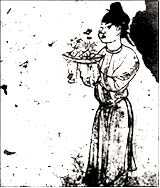
Interestingly, too, container plantings have been written about and artistically represented in one form or another in almost every sophisticated culture, both ancient and modern.  The close relationship between nature, horticulture and human cultures as well as the respect for and exploration of that relationship, appears to have been an intrinsic part of many cultures from many parts of the world; these include the ancient Egyptians, Greeks and Romans, Persians and Hindus, among others.
It is not difficult to understand that, as people lived with plants every day, they would learn a great deal about them, including the fact that they could be packed up and taken along with migrating families, carried over long distances and difficult terrain, and re-established in the household when its members were newly settled.  This process could only have been successful if containers of a manageable size were used.  Also, close proximity with those plantings would make it easier for their owners to know when they would flower, fruit and so on.  Such constant observations would give growers sufficient knowledge to enable them to manipulate factors such as the time of bloom and even the copiousness of fruit production.  Thus for the New Year a Chinese family, for example, could look forward to the presence of the flowering apricot.
Apricot Trees in Blossom By Vincent Van Gogh Round Mouse PadAs one of the earliest spring-flowering trees to produce blossoms (in many bonsai nurseries in Tokyo today, apricots are in full bloom at the end of February), the apricot became a powerful and important symbol of the end of winter and a harbinger of the good springtime to come.
There was a strong horticultural tradition in ancient Egypt.  In their pottery, carvings, and drawing, some of which have been found in the temples near Thebes which were built over 4000 years ago - the Egyptians depicted trees in containers, and trees growing in rock crevices.  It appears from contemporary works of art that trees were brought great distances to enhance the formal garden of Queen Hatshepsut.  Pharaoh Rameses II was reputed to have encouraged the development of gardens within his temples, and the use of potted plants of all kinds, including olives, lotuses, rushes, lilies, date palms, and grasses, to decorate them.
Hindus practiced the science of dwarfing trees in order to insure that they had to hand the substances used in the healing science of Ayurvedic medicine, known throughout India and still practiced today.


Container planting was adopted in almost every sophisticated early culture, then tailored to suit the multiplicity of climates and ways of life in different countries.  Consequently growers' understanding of the nuances of raising and keeping plants became more and more refined, as they became more aware of the detailed relationship between sun and soil, water and nutrients, and the ultimate well-being of their potted plants.  Garden planning and design grew in importance, and plants in containers became an integral feature of both formal and informal gardens.

To be continued...
Thanks Kenro Izu for sharing your knowledge with us.