Welcome

As is the gardener, such is the garden!!
The trouble with gardening is that it does not remain an avocation, it becomes an obsession. - Phyllis McGinley

Showing posts with label Naming. Show all posts

Friday, September 30, 2011

How to take care of the Fuchsias (Aljaba)

A gardening care guide for the fuchsia plant, known as a difficult flower to grow, is provided for you by gardening experts. The romantic, vibrant colored fuchsia plant has blossoms that dangle beautifully from flower pots, hanging baskets, or over the soil in a flower garden. If your not familiar with the fuchsia plant, let me teach you all you need to know about this beautiful plant. The fuchsia flower is a prolific bloomer all summer long and can be grown indoors with proper care. Learn how to grow and care for an interesting addition to your garden or home, the fuchsia plant.

The fuchsia plant is named after Leonhard Fuchs, a German doctor who lived in the early 1500's. Almost all the fuchsia varieties we know of today come from South and Central America, New Zealand, and Tahit.

Originally, nearly 100 varieties of fuchsia were known, but they have been hybridized so much that today there are countless varieties.

Fuchsias are low growing, bush or sometimes tree-like plants. We still cultivate many varieties as indoor plants, and one of them is so hardy that it can winter in the open in the south. Most of the cultivated Fuchsia varieties are hybrids which may be low, rather droopy flowering plants, semi-tall trees or shrub-like plants. People often prop them up to allow the beautiful flowers to hang freely from the leaf crown that radiates from a slender stem.

Fuchsia is rich in color. The eye catching colorfulness of the fuchsia flower is due to the fact that the sepals, leaf lobes and petals, are all richly colored. Fuchsias are the most beautiful when kept in rather cool conditions in half-shade. Too much warmth and sunshine leads to rapid flower loss and severe evaporation from leaves and stems. Always make sure that the fuchsia plant gets the water it needs in the growth period. All varieties of fuchsia require special care, but they will reward all your efforts by forming lovely new flower buds on the tips of their stems.


A gardening care guide for the fuchsia plant, known as a difficult flower to grow, is provided for you by gardening experts. The romantic, vibrant colored fuchsia plant has blossoms that dangle beautifully from flower pots, hanging baskets, or over the soil in a flower garden. If your not familiar with the fuchsia plant, let me teach you all you need to know about this beautiful plant. The fuchsia flower is a prolific bloomer all summer long and can be grown indoors with proper care. Learn how to grow and care for an interesting addition to your garden or home, the fuchsia plant.


Fuchsias are like children, though: each one requires a lifetime of care, or else…well, they won’t be much fun. Before I learned to take care of fuchsias, my well-intentioned gifts were crispy, drowned, or diseased by the Fourth of July. It turns out, though, that—unlike children—fuchsias are easy to care for, if you know a little bit about their needs.

Fuchsia is a genus comprising over 100 species of flowering shrubs and trees. The dangling habit and teardrop shape of the flowers gave rise to the popular name ladies’ eardrop. Most fuchsia are native to South America, where they grow in the understory of tropical or subtropical forests. There are a few interesting exceptions, however: Fuchsia excorticata is a tree from New Zealand that can reach 15 meters in height.
The plants you see at local flower shops are selected clones (cultivars), propagated by cuttings, not from seed. Over 10,000 cultivars have been described, and up to 2,000 are commonly grown. Nearly all of these cultivars, however, share the requirements of their South American ancestors: plenty of shade, frequent but not constant watering, and rich (read: fertilized) soil. To look their best, many fuchsia also need to be pruned at least yearly. If you can meet these needs, your fuchsia plant will remain lovely for many years.

Sun

Morning sun or sun-dappled shade is ideal for most fuchsia. Fuchsia can thrive in the sun, but the root system must be kept moist. Unless you are prepared for eternal vigilance, shelter your fuchsia from the hottest sun.
The flower symbolism associated with the fuchsia is confiding love. Fuchsia flowers are a very decorative pendulous "eardrop" shape, borne in profusion throughout the summer and autumn, and all year in tropical species. In many species, the sepals are bright red and the petals purple, a combination of colors that attract hummingbirds.

Water

Fuchsia should be watered in the morning, frequently enough to keep the soil moist but not soaked. In hot weather, you will need to water every day, while in cooler weather, twice a week will suffice. To decide whether to water your plant, look at and feel the soil. If the soil remains quite wet, right to the surface, then the plant doesn’t need more water. If the topmost layer has started to dry, then give water. Remember: fuchsia is more commonly killed by overwatering than by underwatering.

Fuchsia has a tendency to wilt on hot afternoons. It will perk up if misted with water or moved into the shade. You should avoid watering in the late afternoon or evening, however. Fuchsia has stomata (pores) in their leaves that close in the evening, preventing it from shedding excess water.

Fertilizer

Fuchsia is known as “gross feeders” and need access to plenty of fertilizer. When the plants are flowering, especially in late summer and fall, use water-soluble fertilizer formulated for tomatoes (higher in potash, or “K”). You can apply full-strength fertilizer every 1-2 weeks or quarter-strength fertilizer at every watering. I find the latter approach simpler.
If you plan to keep your fuchsia for years, you will need to overwinter the plant (see below) and then feed through the spring and summer. During the first month of spring, when the fuchsia starts to put out new growth, use high-nitrogen feed. Through late spring and summer, switch to a balanced feed (such as NPK 20-20-20). Then, as the plant starts to flower heavily, use tomato feed as suggested above.

Pruning

Fuchsia only develop flowers on new growth. This means that you need to encourage a nice distribution of new growth each year in order to have a concentrated show of flowers.
Fuchsia should be cut back by one-half to two-thirds in late autumn, as the temperatures cool and growth starts to slow down. Fuchsia in pots can be cut back to 4-8” above soil level. The remaining stems will form the skeleton of next year’s growth. Without this pruning, the plants become long-stemmed over time, with flowers only showing on the newer, outside growth.In the spring, as the fuchsia starts to grow vigorously again, begin applying high-nitrogen fertilizer as mentioned above. When the stems have at least three pairs of leaves, you can “stop” the plant to encourage a bushy shape with more branches and, as a result, more flowers. Simply remove the growing tip from stems after they have acquired several pairs of leaves. Do not remove the growing tip before this point, as new branches will only form at the junctions between leaves and stems. Be sure not to damage these critical areas (the leaf axils). You can stop the plant again after the new branches have several pairs of leaves.
Stopping can be difficult for the novice to stomach. The process may seem to threaten your plant. Remember this, however: the more stops you put in, the more flowers you will get out.

Overwintering
Even a single, light frost can kill some types of fuchsia. Therefore, the plants must be kept above freezing throughout the winter. If the temperature is likely to drop below 40-45 degrees Fahrenheit, then the plants will likely lose their leaves and go dormant. When the plants are defoliated, they can be lightly watered and placed under a table, covered in peat, or wrapped in bubble wrap or newspaper. Note that the fuchsia must not be allowed to dry out over the course of the winter. They will need to be checked and watered occasionally. If the plants dehydrate, they will die. In the spring, when all chance of frost has passed, the plants can be brought out of storage and into a shady spot, then watered. When new growth appears, begin applying fertilizer.

In warmer areas, or if you have access to a heated greenhouse that will keep the temperature above 45 degrees, fuchsia can be kept in green leaf throughout the winter. They will grow slowly throughout the winter, giving them an excellent start in the spring. Keep watering to a minimum so that the potting medium is just moist.
Fuchsia is easy to care for if you remember their sub-tropical origins. Keep them moist but not wet, give plenty of fertilizer, and prune in the autumn to encourage new growth next year.


Tuesday, September 13, 2011

Fernes, Mosses and Liverworts (Ground cover for bonsai)

The ground cover of your bonsai is one of the important aesthetic elements that will improve the overall visual composition of your bonsai, as well as assist in providing soil chemical stability and retaining temperature and moisture for the bonsai tree’s surface roots. A good choice of ground cover vegetation coupled with other landscaping accessories will complement your bonsai tree greatly. (It is also one of the assessment factors in bonsai competitions.)

There are functions for everything in bonsai, and mosses and lichens, used as ground covers, are no exception. They, of course, look great, covering the soil surface with 'green velvet' and helping to retain water while holding the soil in the container. For people buying bonsai, the presence of moss is always a good sign. There are a great number of types of mosses and lichens and these can be mixed to provide a very effective result overall. When not used for 'conservation' purposes, they should be planted sparingly so that their effect is natural, and they do not prevent water from reaching the soil.

There is a particular method of mossing a potted bonsai that will produce a smooth mat of deep green, with none of the lumpy growth that can be typical of piecing bits of moss together. With a sharp knife, slice the moss from its growing place, taking as little soil as possible. Put this moss in a container lined with paper, and moisten it lightly (it should be moist, not wet). Remove most of the remaining soil from the moss using sharp scissors, pulling each little tuft away from the larger piece.
Prepare the surface soil in the bonsai pot by scratching it to roughen it up. With long handed tweezers, start inserting each tuft of moss close to, but not against, the trunk. Work out and away from the trunk until you have the look you want, then brush off most of the tufts. Sprinkle dry soil over the moss and press it down with a flat spatula or small trowel (even your hand if you are careful). Mist gently two or three times and the soil will settle down between the tufts.

As an alternative to collecting moss and going through this somewhat time consuming process, you can use dried moss. Gather it, then place it in the shade for a few days until it is completely dry. Put it through a fine strainer - a sieve will do - to crumble it. Mix the particles with some soil and spread it over the bonsai soil in the pot, making a thin, even layer. Press it down with a flat spatula or small trowel and gently mist continually until the soft green moss begins to grow. Some people just scrape soil off the bottom of the moss and put this on the soil of the bonsai, but takes a much longer time to root and is a delight for small birds when looking for worms if left exposed. Along with the growth of a healthy crop of moss often comes the appearance of a silver fungus around the soil line at the trunk of the tree. This is a sign of a healthily growing bonsai. The fungus develops as the moss takes hold, and it cannot be artificially implanted. In the heat of summer, moss may turn brown. It means the bonsai is getting the water it needs. As soon as cooler temperatures and higher humidity return, so will the 'green velvet'.
  
Ferns, Mosses and Liverworts are flowerless plants, reproducing by small, dust-like spores that are dispersed by the wind.  They are most abundant in damp habitats and most climates, as their thin leaves are easily damaged by desiccation.  Also, unlike flowering plants that produce pollen, fertilization is brought about by a male sperm, which needs a film of water in which to swim to the egg.
Moses and liverworts belong to a group of plants known as the Bryophyta . Their spores develop in a capsule, usually situated at the top of a stalk, or seta.  Mosses differ from liverworts in the structure of the spore capsule and the arrangement of their leaves.  About 65 different mosses and liverworts have been found growing on the bark of oaks, but very few ferns habitually grow on the trees themselves.
Ferns like bright diffused light and moist soil. Prune dead fronds from the plant immediately and keep humidity near the plant high for best results.
 
 
Polypodium vulgare: Ferns are common in oakwoods but the Common Polypody is the only species that regularly grows on trees themselves.  The spores develop in the microscopic sacs called sporangia, which are arranged in orange-brown clusters, called Sori, on the undersides of the fronds.


Lophocolea bidentata/heterophylla: The bidentata is a common leafy liverwort, found on decaying logs and among mosses on woodland banks. The heterophylla grows on the lower parts of trunks and branches, and its upper leaves are unlobed, unlike the bidentata.


Isothecium myosuroides:  This is a very common moss throughout Britain and central Europe, typically growing on the lower parts of tree trunks, on falled logs, and also on shaded rocks adn boulders.  It is a pleurocarpous moss, with spore capsules growing from the sides rather than the ends of the branches, and has a characteristic olive-green sheen.

Amblystegium serpens:  This is one of the smallest European species of pleurocarpous moss, with tiny leaves, and it is common on fallen logs and the lower branches of trees throughout Britain and central Europe. It produces capsules almost all year round.


Dicranoweisia cirrata:  This is the most common of the acrocarpous mosses, (mosses that have capsules at the tips of erect shoots), of tree trunks and lower branches.  It is usually fertile and is found throughout Europe, specially in areas with low levels of atmospheric pollution.
Ulota crispa:  This occurs in small, yellow-green tufts on twigs and small branches of hazel and elder, as well as young oaks.  Widespread throughout Europe, it is less common in the Midlands and southeast regions of Britain. 


Mnimum hornum: This is one of the most common European woodland mosses.  It grows on tree trunks, decaying logs, stream banks, and woodland floors, especially on acid soil throughout Britain and central Europe. It forms extensive dark-green patches.


Eurhynchium praelongun: A delicate species of pleurocarpous moss common in central Europe, it favours decaying stumps and logs.  It has fine, feathery branches and small leaves, and regular branching of shoots is characteristic.


Frullania dilatata:  A small, leafy liverwort, it can frequently be found growing on the lower branches and trunks of oaks and other trees.  The reddish-brown colour is characteristic of the Frullania species.  It is widespread in Britain and Europe, except in polluted areas and the extreme north.


Dicranum scoparium:  This is a common moss on fallen logs, woodland banks and the trunks and lower branches of trees.  It grows in bright green patches and the tips of its erect shoots all curve over in the same direction.


Hypnum cupressiforme:  A very common moss throughout Europe, this grows in mats on banks, trees and decaying logs, Similar to isothecium myosuroides, it grows higher up on trees and has more curves leaves.


Brachythecium rutabulum:  This is a robust species of pleurocarpous moss wit a characteristic yellow-green, glossy tinge to the branch tips.  It is common on tree trunks and decaying logs, especially where the soil is fertile.  It is abundant throughout central Europe.


There exists a multitude of suitable ground cover plants for growing bonsai, and those above are only a fraction of the plentiful choices available. It must be remembered that the ground cover should never be totally shaded and covered up with growth, as the soil needs the warmth from the sun to provide conducive conditions for root growth.
Thanks Richard Lewington.

Sunday, September 04, 2011

Eucalyptus Globulus


Eucalyptus, blue gum, fever tree

Family: Myrtaceae (Zone 9)

The Australian eucalyptus is cultivated all over the world. Leaves from young trees are rounded and blue-green with a silvery bloom, those from mature trees are longer, pointed, tough and glossy green.
The first leaves are broad, without stalks, of a shining whitish-green and are opposite and horizontal, but after four or five years these are succeeded by others of a more ensiform or sword-shaped form, 6 to 12 inches long, bluish-green in hue, which are alternate and vertical, i.e. with the edges turned towards the sky and earth, an arrangement more suited to the climate and productive of peculiar effects of light and shade. The flowers are single or in clusters, almost stalkless.

It was Baron Ferdinand von Müller, the German botanist and explorer (from 1857 to 1873 Director of the Botanical Gardens in Melbourne), who made the qualities of this Eucalyptus known all over the world, and so led to its introduction into Europe, North and South Africa, California and the non-tropical districts of South America. He was the first to suggest that the perfume of the leaves resembling that of Cajaput oil, might be of use as a disinfectant in fever districts, a suggestion which has been justified by the results of the careful examination to which the Eucalyptus has been subjected since its employment in medicine. Some seeds, having been sent to France in 1857, were planted in Algiers and thrived exceedingly well. Trottoir, the botanical superintendent, found that the value of the fragrant antiseptic exhalations of the leaves in fever or marshy districts was far exceeded by the amazingly powerful drying action of the roots on the soil. Five years after planting the Eucalyptus, one of the most marshy and unhealthy districts of Algiers was converted into one of the healthiest and driest. As a result, the rapidly growing Eucalyptus trees are now largely cultivated in many temperate regions with the view of preventing malarial fevers. A noteworthy instance of this is the monastery of St. Paolo à la tre Fontana, situated in one of the most fever-stricken districts of the Roman Campagna. Since about 1870, when the tree was planted in its cloisters, it has become habitable throughout the year. To the remarkable drainage afforded by its roots is also ascribed the gradual disappearance of mosquitoes in the neighbourhood of plantations of this tree, as at Lake Fezara in Algeria.

In Sicily it is being extensively planted to combat malaria, on account of its property of absorbing large quantities of water from the soil. Recent investigations have shown that Sicilian Eucalyptus oil obtained from leaves during the flowering period can compete favourably with the Australian oil in regard to its industrial and therapeutic applications. Oil has also been distilled in Spain from the leaves of E. globulus, grown there.
In India, considerable plantations of E. globulus were made in 1863 in the Nilgiris at Ootacamund, but though a certain amount of oil is distilled there locally, under simple conditions, little attempt has hitherto been made to develop the industry on a commercial scale, Australia remaining the source of supply.
A great increase in Eucalyptus cultivation has recently taken place in Brazil as a result of a decree published in 1919 awarding premiums and free grants of land to planters of Eucalyptus and other trees of recognized value for essence cultivation.

There are a great number of species of Eucalyptus trees yielding essential oils, the foliage of some being more odorous than that of others, and the oils from the various species differing widely in character. It necessarily follows that the term Eucalyptus oil is meaningless from a scientific point of view unless the species from which it is derived is stated.
They contain a strongly scented oil in small translucent glands. The woody flower bud has a lid that is pushed off as the mass of stamens emerge. The bark frequently peels off in characteristic ragged strips.

It is used as a leave infusion (antiseptic, anorexigenic), essential oil (antiseptic, wound healing, expectorant).
The British Pharmacopoeia describes Eucalyptus Oil as the oil distilled from the fresh leaves of E. globulus and other species.The oils may be roughly divided into three classes of commercial importance: 
  • the medicinal oils, which contain substantial amounts of eucalyptol (also known as cineol) 
  • the industrial oils, containing terpenes, which are used for flotation purposes in mining operations 
  • the aromatic oils, such as E. citriodora, which are characterized by their aroma. 
The British Pharmacopoeia requires Eucalyptus Oil to contain not less than 55 per cent, by volume, of Eucalyptol, to have a specific gravity 0.910 to 0.930 and optical rotation -10 degrees to 10 degrees. The official method for the determination of the Eucalptol depends on the conversion of this body into a crystalline phosphate, but numerous other methods have been suggested 
The medicinal Eucalyptus Oil is probably the most powerful antiseptic of its class, especially when it is old, as ozone is formed in it on exposure to the air. It has decided disinfectant action, destroying the lower forms of life. Internally, it has the typical actions of a volatile oil in a marked degree.
Eucalyptus Oil is used as a stimulant and antiseptic gargle. Locally applied, it impairs sensibility. It increases cardiac action.
The oil is a powerful antiseptic and disinfectant. Rub in onto the chest for bronchitis and chest complaints, and sprinkle on the pillow to soothe coughs, colds and asthma. Several drops in warm water make a gargle for sore throats. To clear the nose and bronchial tubes, boil 25g (1 oz) fresh leaves in one liter (2 1/4 pints) water, then inhale the steam with a towel over your head.The bark produces a beige dye and when boiled for about 2 hours, the fresh leaves give a beautiful red.

When to use it? external use : antiseptic for cuts, burns, leucorrhea, respiratory infections (inhalation)
internal use : respiratory infections: sinus infection, bronchitis, common cold or flu with associated bronchitis, urinary infections

When not to use it? When you have allergy to eucalytus, possible bronchospasm with essential oil. all alkaloid are dangerous drugs.intoxication lead to hallucinations, dementia, possible death.

In veterinary practice, Eucalyptus Oil is administered to horses in influenza, to dogs in distemper, to all animals in septicaemia. It is also used for parasitic skin affections.


Saturday, August 27, 2011

The History of the Pomegranate


The many-seeded fruit of the pomegranate tree (Punica granatum), native to the Near East and tropical Africa, is one of the oldest Semitic symbols of life, fertility and abundance. The pomegranate, along with wheat and the grape, was regarded as one of the prime attributes of Ibritz, the Hittite god of agriculture. It was embroidered at the hem of Aaron's sacred robes and adorned the official vestments of the priest-kings of ancient Persia. The capitals and pillars of the Temple of Solomon were covered with carved pomegranates. Pomegranates were served at the marriage banquets of ancient Assyria and Babylonia as a symbol of love and fecundity.
When the pomegranate traveled from Asia Minor to the Far East, its symbolic meaning accompanied it. At Oriental weddings, seeds of the pomegranate were offered to the guests and when the newly-weds entered their bedchamber, pomegranates were thrown to the floor of the bursting fruits strewed their seeds all over the room, signifying that the marriage should be happy and blessed with many children. When the Moors conquered Spain about 800 A.D., they introduced the pomegranate into the Iberian peninsula and the fruit became the emblem of Granada, whose name was derived from it.

Catherine of Aragon (1485-1536), the first wife of Henry VIII, wore the Spanish emblem of the pomegranate, and the Oriental fruit became the badge of their daughter, Mary Tudor (1516-1558), Queen of England.

Presumably, the pomegranate was introduced into the new world by the early Spanish colonists and has since been commonly cultivated in gardens ranging from warmer sections of the USA to Chile. Small commercial plantings have been made in California. Though pomegranates will grow in a wide range of climates, good fruit is produced only where high temperature and dry atmosphere accompany the ripening period.
Varieties cultivated in the USA are the Wonderful, the Paper-Shell, and the Spanish Ruby.
The name of the pomegranate was derived from the Latin pomum (apple) and granatum (with seeds). When the explosive shell that strewed metal particles over a wide area was invented, the French, mindful of the seed-scattering characteristics of the pomegranate, called it granade, and the special regiments, founded in 1791, who launched these new weapons, were called granadiers.


In folk medicine, the fruit's astringent properties have been used to treat various ailments (cuts, sore throats, tapeworms, dysentery, and gum disease). Pomegranate juice is marketed in the United States as a major source of antioxidant nutrients that protect against heart disease and other ailments. Recent research has focused on its potential use as a treatment for cardiovascular disease, diabetes, and various forms of cancer.

Pomegranates are a good source of vitamin C, providing between 10-20% of the recommended daily allowance according to one source and up to 40% according to another. The potent antioxidant properties of the fruit have been attributed to its high content of soluble polyphenols. When tested in vitro on normal and colon-cancer cell lines, the juice was found to have superior antioxidant, antiproliferative, and proapoptotic effects compared with single purified active ingredients, probably the result of synergistic actions among the fruit's multiple compounds. Studies have shown that the antioxidant activity of the pomegranate flowers yielded activity two to three times the antioxidant potency of tea or red wine.

In studies of the fruit's anticancer effects, pomegranate fruit extract (PFE) has been found to be chemopreventive in mouse mammary organ culture and in human breast cancer cells in vitro. Researchers at the University of Wisconsin in Madison found that PFE significantly reduced serum prostate-specific antigen levels and inhibited proliferation of aggressive human prostate cancer cells in athymic mice. Pomegranate extracts have exerted antiproliferative, antiestrogenic, and proapoptotic actions on leukemia cells as well as breast- and prostate-cancer cells.
Its juice may be cardioprotective, reducing risk factors (such as cholesterol accumulation, foam-cell formation in macrophages, and oxidized low-density lipoprotein [LDL]) without affecting native LDL.
In a randomized, double-blinded, placebo-controlled study at the Preventive Medicine Research Institute in Sausalito, CA, pomegranate juice drinkers with coronary artery disease had a 17% improvement in blood flow compared with an 18% worsening in the control group. The study team concluded that the antioxidants in the juice may help prevent the formation of fatty deposits on artery walls. Australian researchers found that pomegranate flower extract reduced factors (hyperglycemia, hyperlipidemia, and a fatty heart) that can result in increased cardiac-impairing fibrosis in patients with type 2 diabetes. Other studies have shown the benefits of pomegranate in promoting neurologic health, maintaining joint integrity and function, exhibiting estrogenic properties, blocking herpes simplex virus replication and adsorption, enhancing immune function, treating periodontal disease, enhancing the activity of antibiotics used to treat methicillin-resistant and methicillin-sensitive Staphylococcus aureus infections, and preventing smooth muscle dysfunction and fibrosis in erectile dysfunction. In Ayurvedic medicine, the astringent properties of pomegranates are linked with bone and cartilage build-up; in the cosmetic arena, fruit-peel extract has been shown to stimulate a type of procollagen synthesis and inhibit a dermal degeneration process.The antioxidant, immune-boosting, and anticarcinogenic properties of the pomegranate, offers multiple potential medical applications.
Thanks Shari Henson for your contribution with this post.


Tuesday, August 23, 2011

What does hydroponics mean?

How-To Hydroponics, Fourth Edition
The term hydroponics is derived from two Greek words, Hudor , water and Ponos, work. When combined, these mean "water working" and a reference to the use of solutions of water and fertilizer chemicals for soilless plant cultivation, as opposed to normal growth in soil or geoponics (the care of the earth).  Quite a number of different methods of hydroponics are today in general usage throughout the world, the exact choice depending upon local needs and conditions.  However, they all conform to the same basic principles and all have one common objective: The growing of plants quite independently of earth or organic matter.

This capacity for divorcing the cultivation of flowers, vegetables, fruits and grains from the soil has profound implications for the development of horticulture and farming.  In short, it means that mankind is no longer solely dependent on the land for sustenance and the satisfaction of natural desires for a beautiful environment, because gardeners and farmers can now produce lovely flowers and raise fine crops without any soil in almost any place they may wish.
Given a minimum supply of water, hydroponic units, both small and large, may be set up in towns and cities, for the enjoyment and use of urban populations, while people living in deserts or barren regions can raise quantities of attractive and healthy plants even under the very infertile conditions common in such areas.
Hydroponics Made EasyApart from these general considerations hydroponics also offers certain important advantages to the individual gardener or householder, including better quality plants, quicker growth, much saving of time and labour (with the elimination of troublesome tasks like digging, weeding and manuring), lower costs, complete absence of dirt and smells, extremely consistent results and year-round attractive displays of blooms or quantities of fresh green-stuff in the home.
The new simple methods, which are described in this book, make it possible for anyone to raise first-class plants without difficulty, even in the most congested surroundings.  Housewives, flat and apartment dwellers, backyard or window-box gardeners, or those possessing roof space, indeed amateurs of every type, in any land, can now use hydroponics to brighten up their daily lives. 


Tuesday, August 16, 2011

Bulbs species that grow well in the Deep South (Part 3)

Narcissus can be well adapted or very picky, depending on the kind.  There are many types, derived from several original species, native to mountainous regions of such places as the Caucasus.  Enthusiasts have divided them into strict categories, based on floral form and habit, but not on adaptability.  You frequently see clumps of yellow jonquils still growing on old home sites; the houses and people are long gone but jonquils remain.  Where the land starts to rise from the coastal plain, you will find naturalized trumpet daffodils, such as the variety King Alfred.  Few daffodils do well south of that line.  Some varieties that do are Ice Follies, Fortune, Thalia (white), Tete-a Tete (dwarf and yellow), February Godl, and Baby Moon, whch has branched flower stems with one inch yellow flowers.   Some of the old white narcissus that bloom in midwinter in the coastal south have been passed along for generations.  Paper-white narcissus, often forced during winter, need no chilling period and if they are properly handled during shipping, are almost certain to bloom the first season from dry bulbs.  After bloom these may be planted into the garden and, after a year to make new leaves and initiate new flowers, can repeat for years. 
A longevity and performance study done at LSU identified several small-flowered bulbs that perform well and persist in south Louisiana and in other areas of the coastal South.  These include Broiaea Laxa, which wens up striking blue flower clusters on stems about twelve inches tall before leaves grow in late spring.  Scilla campanulata, sometimes called Canterbury bells, produces stems about a foot tall with clusters of one-inch, nodding, bell-like flowers (they can be blue, white or pink).
Triteleia uniflora sends up leaves in early winter, then one-inch star-shaped flowers on six-inch stems in early spring.  These increase from offsets as well as seeds, and may invade the lawn near beds where they grow.  Most people find this desirable, especially as it is too early to mow the grass.  Later on, just mow over them.
One invader that can be troublesome is star-of-Bethlehem (Ornithogalum umbellatum).  this grows about eight inches tall, with leaves emerging in early winter, and flwers in spring with clusters of white blooms with dark centers.  Charming as they are, they produce huge numbers of offsets that spread throughout the bed, defying efforts to remove them.
Rain lillies, species of Habranthus and Zephyranthes can border beds without becoming a nuisance.  These got the common name from their habit of respondingto rains, especially after dry spells, with a profusion of flowers.  Some bloom as early as April in the humid South-some as late as September.  Most are native to Mexico or to Central or South America-a few are native to the Gulf crescent from south Florida through coastal Texas.  Severe cold limits the range of most.  Flowers are usually from one to three inches across, lilylike on stems up to 18inch tall.  Colors range from white and yellow through rose and pink; apricots and pure reds are known.
Cannnas used to be more popular back in the old days, because they take up a lot of space.  There is a leaf roller insect that turns up wherever cannas are grown.  This little critter presents a constant challenge to anyone who tries to keep cannas' foliage looking good.
Callas are old-fashioned plants that have been dramatically improved by breeders in recent years.  We all thought that callas were like lillies as the tall, white zantedeschia aethipica with 3 foot stems.  We also thought of them as plants for funerals, but the newr forms and species, especially Z. elliotiana (yellow) and Z. rehmannii (red) have some really "hot" colors and smaller plants, they would look out of place at a funeral.  You can now choose from colors such as coral, pink, burgundy or yellow-some with attractive white spotted leaves.  All of these will be damaged by hard freezes, but mulching will protect them into the mid-twenties, or they can be lifted and stored over colder periods.

We almost forgot to mention Leucojum aestivum, the snowflake.  This small spring-flowering bulb can substitute for lily-of-the valley (convallaria), which does not do well in hot weather.  


Snowflake makes stems about a foot tall with clusters of nodding, bell-like blooms, which are white with a distinctive green dot at the ends of the floral segments.  


Thanks to Ed and Leon

Friday, June 24, 2011

What is a Bonsai? The History of Bonsai (Part 1)

Bonsai. The word elicits varying reactions:  Admiration; Curiosity; Indifference.  Enthusiasts practice the art for years, sometimes traveling halfway round the world to study with one of the handful of acknowledged bonsai masters.  For these dedicated enthusiasts, bonsai can, and often does, quickly become a way of life.  They are the people who stand before a display of well-grown examples and shed tears.  Others turn away, unimpressed by the small trees in their even smaller containers, convinced that the trees are sick, or have been tortured.  In fact, the reverse is true.
Zen Reflections Juniper Bonsai

No matter what an individual's reaction to a single bonsai may be, bonsai cannot be easily dismissed.  In China, where it probably originated, and in Japan where the styles which are emulated around the world evolved, its associations with art and history, philosophy and religion are a dominant part of its mystique.  Today, they are becoming better known in the West too.
This chapter sets out the history of bonsai and explains a little of the philosophy behind it and how it came to be such a potent cultural symbol for so many people.  An understanding of some of these factors, many of which are alien to Western thinking, will help to enhance your appreciation of this art form.

To the Japenese, there is a definite link between bonsai, nature, Man and God.  This partly arises from ZEN BUDDHIST philosophy, which holds that spirituality can only be expressed through minimal aesthetic means, but it also goes deeper than this.
For the newcomer, probably the best way to understand the philosophy behind it is to start with the word itself.  Bonsai (pronounced BONE-SIGH), literally translated means "Planted in a tray" or "potted dwarfed tree", depending on the translator.  But it is important to remember, in addition, that bonsai is a living art.  It compares with art forms that use paint and canvas, or marble and chisel, because bonsai too creates a composition and evokes emotional response by the sheer beauty of the material used and its container, and the effect of its stance and configuration on the viewer.
Penjing Bonsai - 10x10 Quilt SquareNo one can say exactly when this art was first recognized and named, since bonsai developed without the benefit of specific written or visual documentation.  It seems, however, that bonsai (known there as "pen-jing" or "pun-sai") were first cultivated in China.  Only conjecture and educated guesses can paint the circumstances under which they developed to become such a powerful symbol to so many people in the civilized world.
The "plant in tray" and the "potted dwarfed tree" have a long history. Evidence of them can be found, after careful scrutiny, in both pictorial pieces and in verbal or written records from centuries agi, some predating the birth of Christ.  There is, for example, a Chinese legend dating from the Han dynasty (206 BC-AD 220) that describes the power to miniaturize landscapes, including trees, to one Fei Jiang Feng.  Written records date from the third and fourth centuries, and it is clear that by the time of the T'ang dinasty (AD 618-906) bamboos, pines and other plants were being grown in containers.
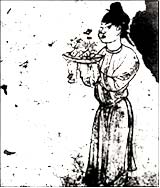
Interestingly, too, container plantings have been written about and artistically represented in one form or another in almost every sophisticated culture, both ancient and modern.  The close relationship between nature, horticulture and human cultures as well as the respect for and exploration of that relationship, appears to have been an intrinsic part of many cultures from many parts of the world; these include the ancient Egyptians, Greeks and Romans, Persians and Hindus, among others.
It is not difficult to understand that, as people lived with plants every day, they would learn a great deal about them, including the fact that they could be packed up and taken along with migrating families, carried over long distances and difficult terrain, and re-established in the household when its members were newly settled.  This process could only have been successful if containers of a manageable size were used.  Also, close proximity with those plantings would make it easier for their owners to know when they would flower, fruit and so on.  Such constant observations would give growers sufficient knowledge to enable them to manipulate factors such as the time of bloom and even the copiousness of fruit production.  Thus for the New Year a Chinese family, for example, could look forward to the presence of the flowering apricot.
Apricot Trees in Blossom By Vincent Van Gogh Round Mouse PadAs one of the earliest spring-flowering trees to produce blossoms (in many bonsai nurseries in Tokyo today, apricots are in full bloom at the end of February), the apricot became a powerful and important symbol of the end of winter and a harbinger of the good springtime to come.
There was a strong horticultural tradition in ancient Egypt.  In their pottery, carvings, and drawing, some of which have been found in the temples near Thebes which were built over 4000 years ago - the Egyptians depicted trees in containers, and trees growing in rock crevices.  It appears from contemporary works of art that trees were brought great distances to enhance the formal garden of Queen Hatshepsut.  Pharaoh Rameses II was reputed to have encouraged the development of gardens within his temples, and the use of potted plants of all kinds, including olives, lotuses, rushes, lilies, date palms, and grasses, to decorate them.
Hindus practiced the science of dwarfing trees in order to insure that they had to hand the substances used in the healing science of Ayurvedic medicine, known throughout India and still practiced today.


Container planting was adopted in almost every sophisticated early culture, then tailored to suit the multiplicity of climates and ways of life in different countries.  Consequently growers' understanding of the nuances of raising and keeping plants became more and more refined, as they became more aware of the detailed relationship between sun and soil, water and nutrients, and the ultimate well-being of their potted plants.  Garden planning and design grew in importance, and plants in containers became an integral feature of both formal and informal gardens.

To be continued...
Thanks Kenro Izu for sharing your knowledge with us.